



Door Frames: The Complete Guide to Types, Sizes and Materials
Posted by Sultan Khan on 13th Mar 2026
A door frame is the structure fitted into your wall opening that holds the door in place. It's simple, but getting the right type, size, and material matters more than most people realise. The wrong frame means a door that sticks, swings poorly, or lets draughts through the gaps.
What is a door frame?
A door frame is the rigid structure fitted into a wall opening. It provides the support that the door hangs from and closes against. Without one, you would just have a hole in the wall and nothing to attach hinges to.
Every internal door in your home sits inside a frame. The frame is fixed to the structural opening (the rough stud work or masonry), and the door is then hung from the frame using hinges. When you close the door, it presses against a thin strip called the door stop, which prevents it from swinging too far.
Door frames do three jobs at once. They support the weight of the door, they create a clean finished edge around the opening, and they provide the mounting points for all the hardware: hinges, latches, handles, and strike plates.
In everyday language, "door frame" has become a catch-all term. When someone says they need a new door frame, they usually mean the full assembly: the lining, the stops, and often the architrave that goes around it.
Parts of a door frame
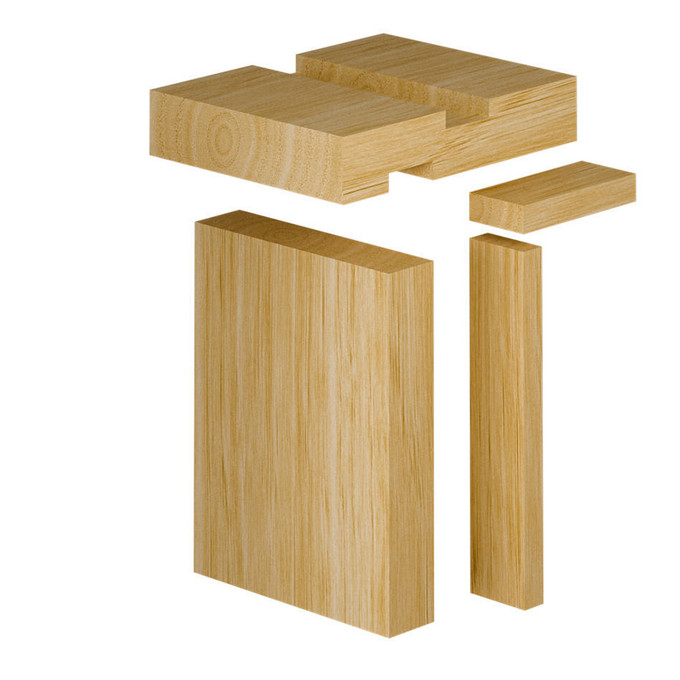
A standard internal door frame is made up of a few distinct parts. Knowing the terminology helps when ordering replacements or talking to a joiner.
The architrave is not technically part of the frame itself. It is the decorative moulding fixed to the wall around the frame, covering the joint between the frame and the plaster. We cover what architrave is and its relationship with door frames in more detail below.
Door frame vs door lining
These two terms get used interchangeably, but there is a difference.
A door lining is a flat piece of timber that lines the wall opening. The door stop is a separate strip that gets pinned or glued onto it after fitting. This is what most internal doors in UK homes use. It is thinner (typically 32mm to 38mm thick), lighter, and easier to work with.
A door frame, in the strict trade sense, has the door stop machined directly into it as part of the profile. The stop is integral, not applied. These tend to be thicker and heavier, and they are more common on external doors where weather resistance and security matter.
| Door lining | Door frame | |
|---|---|---|
| Door stop | Loose (applied after fitting) | Integral (machined in) |
| Typical thickness | 32mm to 38mm | 44mm to 70mm |
| Common use | Internal doors | External doors |
| Weight | Lighter | Heavier, more robust |
In practice, most people (and most product listings) use "door frame" to mean either one. When shopping for internal door frames, what you are usually buying is technically a door lining set with loose stops included.
Door frame sizes
Internal door frames in the UK are sized to accept the standard door leaf dimensions. The frame needs to be slightly larger than the door itself to allow for clearance gaps on all sides.
Standard internal door sizes
The most common internal door in England and Wales is 1981mm tall and 762mm wide (6'6" x 2'6"). In Scotland, doors tend to be 2040mm x 726mm. Your frame height and width need to match the door you are hanging, plus a few millimetres of clearance either side.
| Door width | Metric | Imperial | Common use |
|---|---|---|---|
| 457mm | 1'6" | 18" | Cupboards |
| 610mm | 2'0" | 24" | Small openings, en-suites |
| 686mm | 2'3" | 27" | Bathrooms, smaller rooms |
| 762mm | 2'6" | 30" | Most common standard size |
| 838mm | 2'9" | 33" | Wheelchair accessible (Part M) |
All standard internal doors are 1981mm (6'6") tall in England and Wales. The height is consistent; it is the width that varies.
Frame lining width
The lining width (sometimes called the "depth" or "thickness" of the frame) needs to match your wall thickness. Most internal stud walls in the UK are around 100mm thick once plastered on both sides. A standard lining width of 108mm to 133mm covers this, with a little extra for the plaster overlap.
Older houses, solid brick walls, and non-standard constructions can have thicker walls. If your wall is significantly thicker, you may need a wider lining or packing strips behind the architrave.
Note: We have a detailed guide to UK door sizes and building regulations that covers dimensions, accessibility requirements, and regional differences in full.
Types of door frame
There are several ways to categorise door frames. The main distinctions are internal vs external, standard vs rebated, and single vs double.
Internal door frames
These are what most people are looking for. An internal door frame (technically a door lining) is a three-sided assembly: two jambs and a head. There is no threshold at the bottom. The material is lighter and thinner than an external frame because it does not need to resist weather or provide the same level of security.
External door frames
External frames are heavier, thicker, and typically hardwood. They have four sides (including a sill or threshold at the bottom), an integral door stop, drip grooves to channel water away, and sometimes weatherstripping. They are designed to keep the elements out and provide more rigidity for heavier external doors.
Standard vs rebated
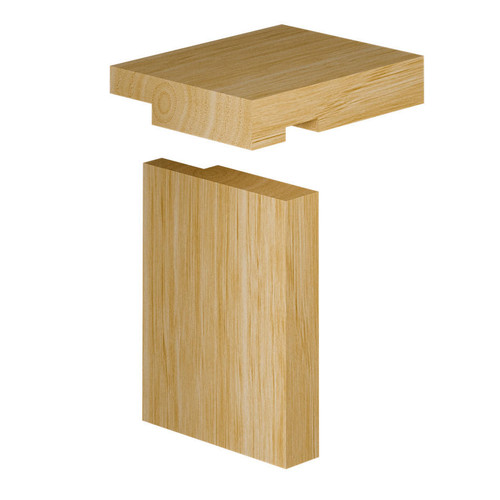
A standard door frame has a flat lining with a separate door stop pinned to it. A rebated frame has a step (the rebate) machined directly into the lining. The door sits into this rebate rather than closing against an applied strip.
Rebated frames give a neater look because there is no visible strip on the face of the frame. They are slightly more expensive and less forgiving if the door is not cut to an exact fit. We sell rebated pine door frame sets for situations where a cleaner profile is wanted.
Single and double door frames
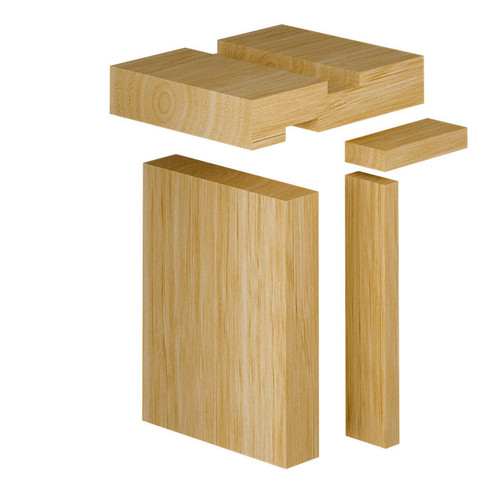
A single frame accepts one door. A double frame (sometimes called a pair frame) accepts two doors and has a wider head piece to span the larger opening. Double frames are used for French doors, wide room dividers, and entrances where a single door would not provide enough clearance.
Door frame materials
The three materials you will come across for internal door frames in the UK are MDF (or more precisely HDF), pine, and hardwood.

For most internal doors being painted, MDF/HDF gives the cleanest finish at the best value. Pine is the choice when you want visible wood grain or plan to stain or varnish. Hardwood makes sense for external frames or where the wood itself is the feature.
Fire door frames
A fire door is only as effective as the frame it sits in. If the frame fails, it does not matter how good the door is. Fire door frames have specific requirements that a standard frame does not meet.
FD30 and FD60 ratings
Fire doors are rated by how long they resist fire. FD30 provides 30 minutes of protection; FD60 provides 60 minutes. The frame must be rated to match the door.
- FD30 is the standard for residential properties. Required on escape routes when you have a loft conversion, on flat entrance doors, and in some other situations under Approved Document B
- FD60 is used in higher-risk locations: commercial kitchens, plant rooms, storage areas with flammable materials, and larger commercial buildings
What makes a fire door frame different
Three things separate a fire-rated frame from a standard one:
Intumescent seals
Strips fitted into grooves in the frame (or the door edge) that swell when exposed to heat, sealing the gap between door and frame. The gap between the door and frame should be between 2mm and 4mm for the seals to work correctly.
Material and thickness
Fire-rated frames are thicker. FD30 doors are typically 44mm thick (compared to 35mm for standard), and the frame material and construction must be tested and certified alongside the door as a complete assembly.
Certified hardware
Hinges, locks, closers, and all other hardware must be fire-rated. FD30 doors can use brass or steel hinges. FD60 doors require steel. Three hinges per door is standard for fire doors.
Important: A fire door assembly is tested and certified as a complete unit: door, frame, seals, and hardware together. You cannot simply put a fire door into a standard frame and expect it to perform. The frame must be part of the certified assembly.
Door frame kits
A door frame kit (sometimes called a door lining kit or door lining set) gives you everything you need for one doorway in a single box: the two jamb pieces, the head piece, and the door stops. Some kits also include fixings.
Buying a kit rather than sourcing individual pieces means the parts are consistent in material, thickness, and finish. The jambs and head are designed to work together, so you do not end up with mismatched grain, colour, or sizing.
What to check when choosing a kit
- Lining width: Must match your wall thickness. Standard is 108mm to 133mm, but measure your wall before ordering
- Door size compatibility: The kit should suit the door you are hanging. Most kits accommodate the standard 1981mm x 762mm door, but check
- Single or double: A single set is for one door. A double set spans a wider opening for a pair of doors
- Finish: Primed kits save time if you are painting. Unfinished kits suit staining or varnishing
- Rebated or standard: Decide whether you want the cleaner look of a rebated stop or the flexibility of an applied one
Our door frame sets
We supply complete door frame kits in both MDF and pine, as well as a rebated pine option. Each set includes two jambs, a head piece, and door stops.
Door frames and architrave
Architrave is the moulding that goes around the outside of the door frame, on the wall face. It covers the gap between the frame and the plaster, giving the doorway a clean, finished appearance.
Without architrave, you would see the raw edge where the plastered wall meets the timber frame. That joint is never perfectly neat, and it moves over time as the building settles. Architrave hides all of this.
Choosing architrave to match your frame
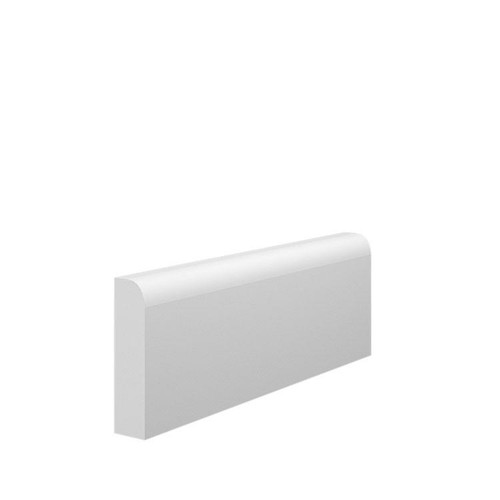
The architrave profile is usually chosen to match the skirting boards in the room. If your skirting has a bullnose profile, the architrave typically does too. This creates visual consistency around the room.
Where the skirting board meets the architrave at the base of the door frame, you have a few options. You can mitre the joint, butt the skirting against the architrave, or use a plinth block to bridge the transition. Plinth blocks simplify the joint and cover any imperfections, which is why they are popular in renovation work.
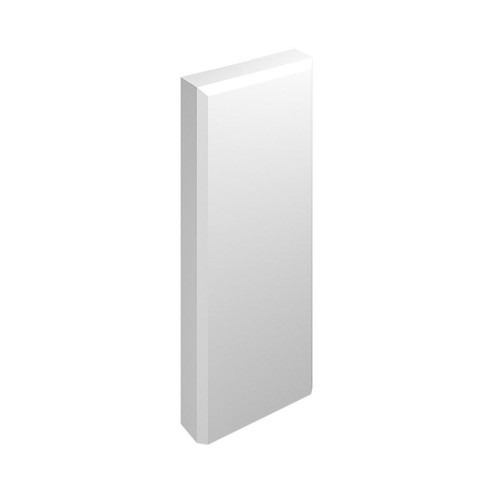
We have a full guide on how to fit architrave that covers measuring, cutting mitre joints, and fixing methods step by step.
How to fit a door frame
Fitting an internal door frame is a task that a reasonably confident DIYer can manage. The key is getting everything level and square; if the frame is not true, the door will not hang properly.
What you will need
Tools
- Spirit level (at least 1200mm)
- Tape measure
- Mitre saw or hand saw
- Drill/driver
- Hammer
- Pencil
Materials
- Door lining set
- Screws (75mm or 100mm)
- Packers/shims
- Expanding foam
- Panel pins (for door stops)
Step by step
Measure the opening
Measure the height and width of the structural opening. Check that the opening is roughly square by measuring the diagonals; they should be within a few millimetres of each other.
Cut the head to length
The head sits on top of both jambs. Its length equals the door width plus the thickness of both jambs, plus 4mm to 6mm total clearance for the door to swing freely.
Assemble the three pieces
Fix the head to the top of the two jambs. Most linings use a simple housing joint or are screwed through the head into the end grain of the jambs. Use a set square to check the corners are at 90 degrees.
Position and plumb the frame
Slide the assembled frame into the opening. Use a spirit level to check the jambs are plumb (vertical) and the head is level (horizontal). Pack behind the frame with timber shims to hold it in position and keep it straight.
Fix to the wall
Screw through the jambs and packers into the stud work or masonry. Place fixings at the top, middle, and bottom of each jamb. If fixing to masonry, you will need to drill and plug first.
Foam the gaps
Fill the gap between the frame and the wall with expanding foam. Use a low-expansion foam like Demsun P88 PU foam to avoid putting pressure on the frame and bowing it inward. Allow it to cure fully before trimming.
Fit the door stops
Once the door is hung, close it and mark the position of the door face on the frame. Pin the door stop strips along this line with panel pins. Leave a very slight gap (about 1mm) between the stop and the door face so it closes without binding.
Once the frame is in, the door can be hung on its hinges. The architrave goes on last, after the plastering is done, to cover the joint between the frame and the wall.
Painting door frames
Most internal door frames are painted to match the rest of the woodwork in the room: the skirting boards, the architrave, and the window boards. White and off-white are by far the most common, though darker finishes such as black and grey are increasingly popular.
Which paint to use
Door frames need a durable finish that resists scuffs and knocks. A satinwood or eggshell is the standard choice for interior woodwork in the UK. Gloss is still available but has fallen out of fashion in most homes.
Water-based acrylic paints are easier to work with (low odour, quick drying, clean up with water) and modern formulations are durable enough for door frames. Oil-based paints give a harder finish but take longer to dry and require white spirit for cleaning.
We have a detailed guide to the best paint for skirting boards and door frames that compares specific products and finishes.
Preparation matters
The paint finish is only as good as the surface underneath. For new frames that arrive primed, a light sand with 240-grit paper and a wipe down with a damp cloth is usually enough before applying your topcoat.
For existing painted frames that need refreshing, sand the old surface to create a key, fill any dents or holes with a fine surface filler, sand again, and then apply your new coat. If the old paint is flaking, you will need to strip it back further before repainting.
Tip: Paint the frame before hanging the door. It is much easier to get a clean finish on all surfaces when the door is not in the way. If the frame is already fitted, remove the door temporarily or mask around the hinges.
Choosing the right door frame
For most internal doors in a UK home, the decision comes down to material and whether you want a standard or rebated stop. If you are painting the frame, MDF/HDF gives the smoothest finish. If you want to see the grain, go with pine or hardwood.
Measure your wall thickness before ordering. Check whether you need a single or double set. And if you are replacing an existing frame, measure the old one rather than relying on "standard" sizes; houses built in different eras have different sized openings.
Browse our full range of door frames in MDF and pine, or take a look at our internal doors if you need the door to go with them.