



10 Plants That Transform Window Sills | Pet Safe | Air Purifying
Posted by Sultan Khan | Seher Saigal on 24th Apr 2026
Plants instantly give life to a window and transform your interior, but choosing the wrong ones leads to dead plants and water-damaged sills. The key is matching plants to your window's conditions and picking varieties that actually thrive in these unique spots.
Browse Moisture-Resistant Window SillsPlants that actually work on window sills
These plants handle the temperature swings, variable light, and space constraints that come with window sill life. They're sorted by how much attention they need.
Set and forget plants
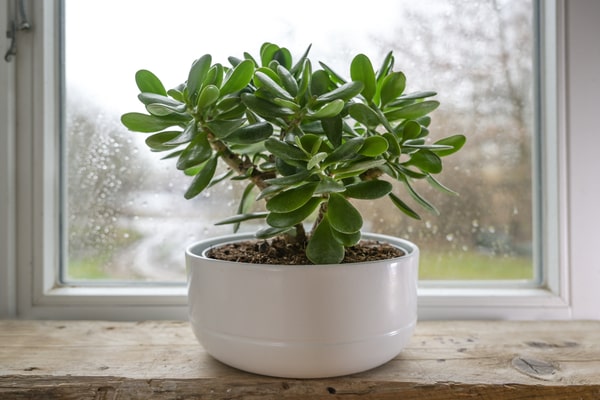
Succulents (jade plant, echeveria, sedum)
Jade plants, echeveria, and sedum store water in their thick leaves, making them drought-tolerant champions. Perfect for sunny south-facing windows where other plants would scorch. Allow soil to dry completely between waterings.
Climate: arid, warm · Maintenance: prune occasionally
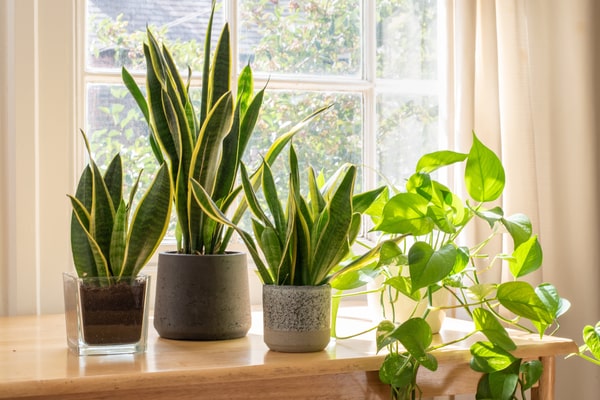
Snake plant (Sansevieria)
Nearly indestructible, with upright leaves that don't take much sill space. Tolerates both bright and low light. One of NASA's top air-purifying plants, removing formaldehyde and benzene from indoor air.
Climate: tropical, subtropical · Maintenance: wipe leaves occasionally
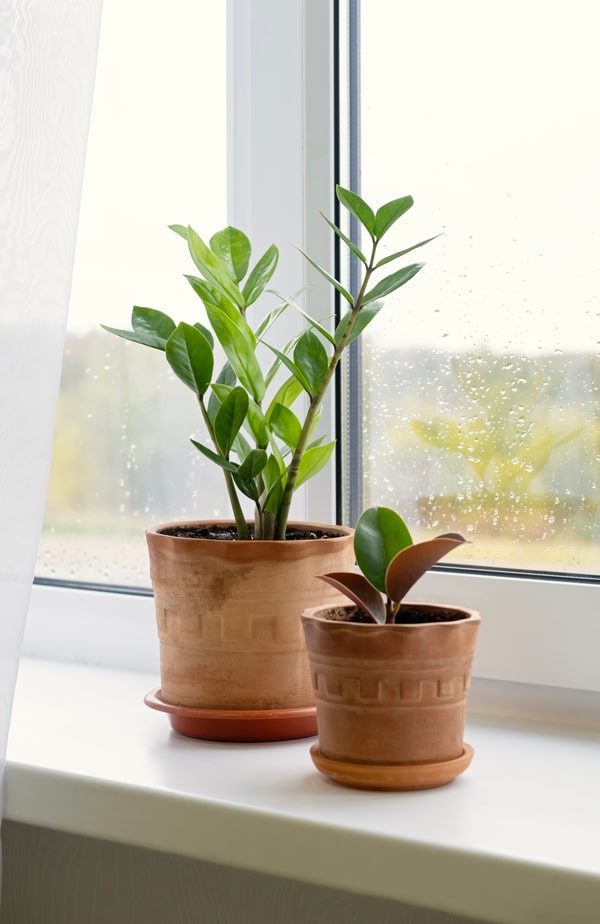
ZZ plant (Zamioculcas zamiifolia)
Glossy, waxy leaves that stay green even in dim corners. Grows slowly so won't outgrow your space quickly. Stores water in underground rhizomes, making it extremely drought-tolerant. Handles temperature changes well.
Climate: tropical, subtropical · Maintenance: very low
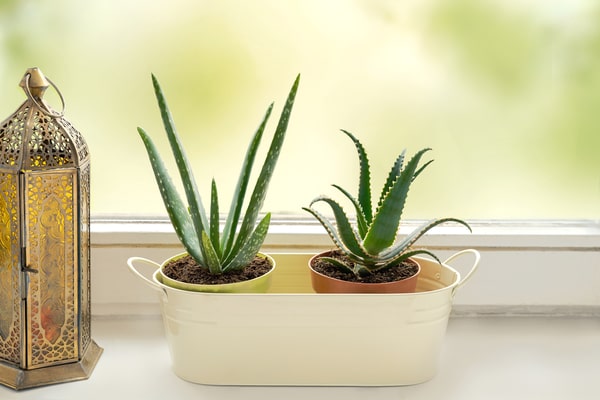
Aloe vera
A practical succulent that provides soothing gel for minor burns and cuts. Thrives in bright, indirect light and helps clean indoor air. Produces offsets that can be separated into new plants.
Climate: arid, warm · Maintenance: very low
Plants worth the extra effort
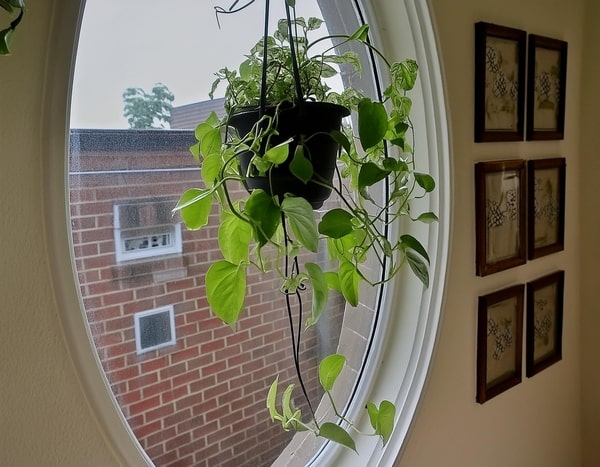
Pothos
Fast-growing vines that trail beautifully or train around window frames. Excellent for removing indoor air pollutants including formaldehyde and xylene. Easy to propagate from cuttings in water.
Climate: tropical, subtropical · Maintenance: prune regularly
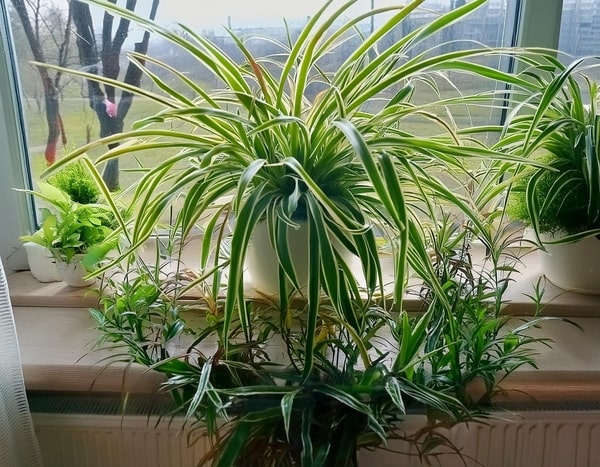
Spider plant (Chlorophytum comosum)
Produces baby plants (spiderettes) on runners that root easily in water or soil. Safe around pets unlike many houseplants. Arching leaves create an attractive cascading effect from sills or hanging baskets.
Climate: tropical, subtropical · Maintenance: remove brown leaves
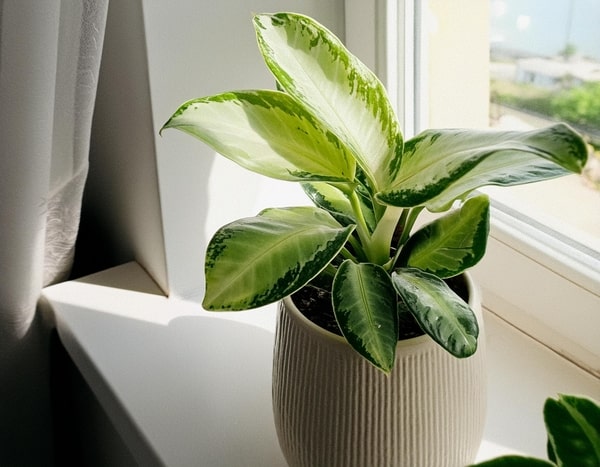
Chinese evergreen (Aglaonema)
Beautiful patterned leaves in varieties featuring pink, silver, red, or green markings. Tolerates low light well, making it perfect for north-facing windows. Removes benzene and formaldehyde from indoor air.
Climate: tropical, subtropical · Maintenance: wipe leaves occasionally
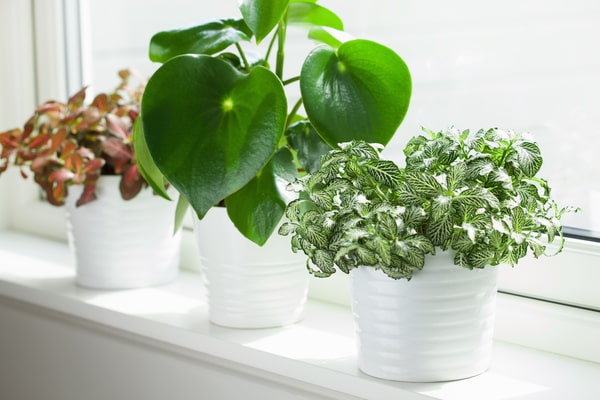
Peperomia
Compact plants with thick, succulent-like leaves in various shapes, colours, and patterns. Perfect for small window sills and safe around curious pets. Many varieties including watermelon, baby rubber plant, and string of turtles.
Climate: tropical, subtropical · Maintenance: low
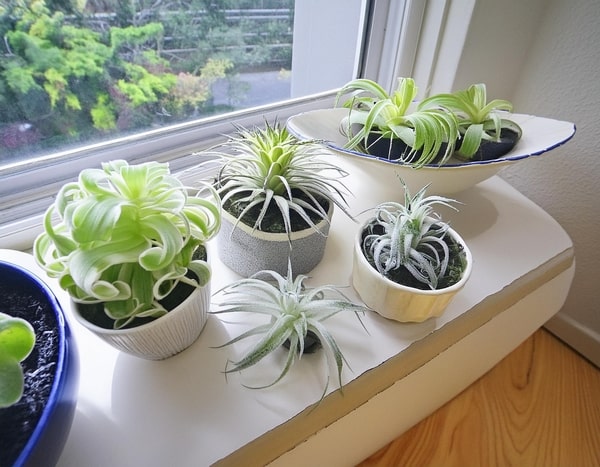
Air plants (Tillandsia)
No soil needed, they absorb water and nutrients through specialised scales on their leaves. Perfect for window sills as they require no drainage holes. Display creatively on driftwood, shells, or in glass orbs.
Climate: tropical, subtropical · Maintenance: very low
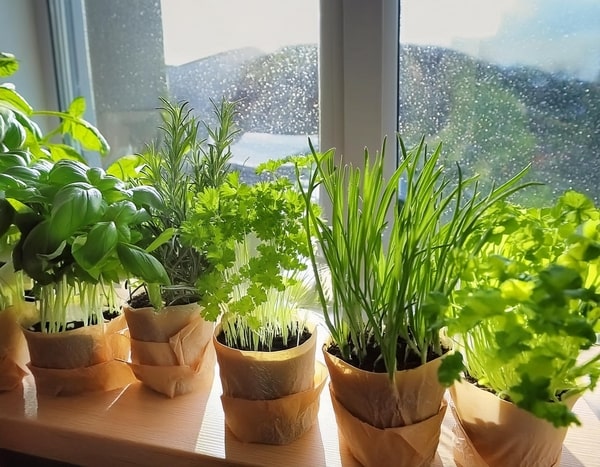
Herbs (basil, mint, thyme, rosemary)
Fresh culinary herbs like basil, thyme, rosemary, and mint thrive on sunny sills with six or more hours of direct sun. Regular harvesting encourages new growth and provides fresh flavours for cooking. Most are annual and need replacing seasonally.
Climate: varies, generally warm · Maintenance: regular pruning and harvesting
Matching plants to your window
Your window's direction determines everything. This quick guide helps you pick plants that will actually thrive in your specific spot.

Architect and Landscape Designer
"A windowsill is perhaps one of the most underutilised surfaces in a home. I often advise clients to treat it as a purposeful vignette, experimenting with different heights, textures, and pot finishes to achieve something that truly looks thoughtful. Most people just line up whatever pots they have and hope for the best."
"What makes windowsills unique in terms of design is that they sit right at the boundary of inside and out, so getting the planting right gives you a genuine connection to nature that you feel in a space but don't understand why."
"My main piece of advice is to always start with your light conditions and then choose your plants around them, rather than the other way around. It's all too easy to be drawn to a stunning plant at the garden centre and then try to force it into an unsuitable spot. A plant that thrives in the right environment will have a far greater impact on the room than a beautiful pot containing something that's struggling to survive. For plant selection and care, the RHS website and app are excellent resources to eliminate guesswork, making it definitely worthwhile to check them out before diving in."
Full sun
South-facing
Six or more hours of direct sun. Gets very hot in summer.
Best for: succulents, herbs, aloe vera, air plants.
Part sun
East or west-facing
Four to six hours of direct sun. Gentler than south.
Best for: most houseplants, pothos, spider plants, snake plants.
Indirect
North-facing
Bright but indirect light. No harsh sun.
Best for: ZZ plants, snake plants, Chinese evergreen, peperomia.
Try right now
Find out which way your window faces
- Open Google Maps or Apple Maps on your phone.
- Find your house. The map always shows north at the top.
- Look at which side of your house the window is on.
Top of the map = north. Bottom = south. Left = west. Right = east.
Seasons change everything. A south window might bake plants in summer but barely provide enough light in winter. Watch how your plants respond and move them if needed.
Protecting your window sill
Plants and water damage don't mix well with most window sill materials. Here is how to avoid expensive repairs while enjoying your plants.
Quick protection tips
- Use waterproof saucers under every pot.
- Place a tray under multiple plants to catch overflow.
- Wipe up water immediately, don't let it sit.
- Check for leaks weekly, especially after watering.
If your sill gets heavy plant use, consider moisture-resistant paint as an extra layer of protection.
Best sill materials for plants
Engineered to handle moisture without warping. Smooth surface is easy to clean and doesn't harbour bacteria.
Natural stone sills
Handles moisture well but can stain from fertilisers. Cold surface in winter might shock plant roots.
Standard wood sills
Can warp and stain with regular watering. Needs careful water management and frequent protection.
Planning an extension? If you are thinking about extending your window sill for more plant space, moisture-resistant materials make sense from the start. Purpose-built plant sills handle the extra moisture and weight better than trying to protect existing surfaces. Take a look at window sill decoration ideas for inspiration.
Common questions
How do I protect window sills from plants?
Use waterproof trays or saucers beneath the pots to catch any excess water. Place a moisture-resistant mat or tray directly on the window sill to protect the surface from water damage. Consider moisture-resistant paint for your window sills as an additional protective layer.
What plants are good for window sills?
Succulents, snake plants, pothos, spider plants, and herbs like basil and thyme work well on window sills. These plants can tolerate varying light conditions and don't require excessive watering, making them suited to the unique conditions of a window sill.
How do I extend a window sill for plants?
Consider using bespoke moisture-resistant MDF for extending window sills. MDF is durable, easy to install, and resistant to water damage, making it a suitable material for a window sill extension to accommodate more plants safely.
Which indoor plants like direct sunlight?
Indoor plants that thrive in direct sunlight include succulents like jade plants and echeveria, herbs like basil and rosemary, and aloe vera. These plants need at least six hours of direct sunlight per day and are well suited to south-facing windows.
Start with what works
Begin with one or two foolproof plants that match your window's light level. Snake plants work anywhere, succulents love sunny spots, and ZZ plants thrive in dim corners. Once you see how plants behave on your particular sill, you can try more demanding varieties.
The key is working with your conditions rather than fighting them. A shady north-facing sill will never support sun-loving herbs, but it's perfect for foliage plants that appreciate gentler light.
With the right plant choices and basic protection for your sill, window gardening becomes a rewarding way to bring life indoors and, in the case of herbs, fresh flavours to your cooking.